

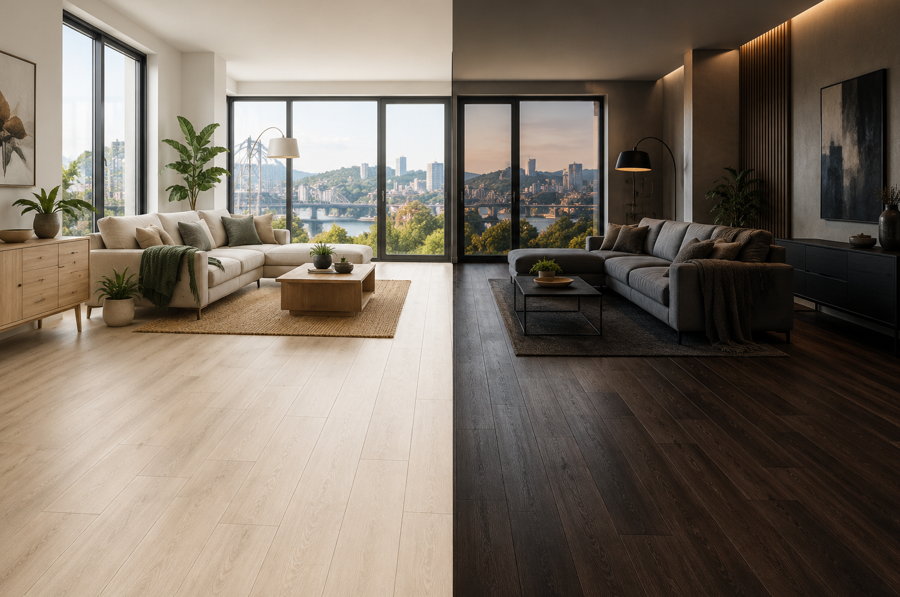
How Flooring Color Changes the Feeling of a Room
Why can two rooms with similar furniture feel completely different? Often, the floor is doing more visual work than people realize. Because flooring covers such a large part of a room, its color influences how bright, open, warm, calm, or dramatic the entire space feels.
Light laminate usually creates a brighter, airier look. Dark laminate tends to bring more contrast, depth, and visual weight. Neither direction is automatically better. The right choice depends on how much natural light the room gets, its size, the colors already in the space, and the mood you want to create.
For Portland homeowners, lighting deserves extra attention. A flooring sample can look one way on a bright afternoon and quite different under softer, gray daylight. That makes it worth thinking beyond how a plank looks in a showroom. You want to know how it will work with your actual windows, wall colors, furniture, and lighting.
When planning a flooring update, Simple Floors Portland can help homeowners compare colors and styles in person before settling on a look for their space.
The biggest question is not simply “light or dark?” It is “what do you want the room to feel like?” If your goal is openness, calm, and brightness, a lighter tone may be a strong fit. If you want warmth, character, and stronger contrast, a darker finish may be more appealing.
This guide breaks down how light and dark laminate affect a room’s ambiance, how Portland light can influence the final look, and what to consider before choosing a color for your home.
What Light Laminate Flooring Does to a Space
Light laminate can completely shift the feel of a room without changing its layout. Pale oak looks, soft beige tones, natural wood shades, and lighter gray finishes tend to keep the floor visually quiet while helping the overall space feel open and fresh.
Creates a Brighter, More Open Feel
Lighter flooring reflects more of the available light in a room than deeper flooring tones. That does not physically make the room larger, but it can make the space feel more expansive.
This effect can be especially useful in rooms where you want to create a sense of ease. Light laminate often works well in spaces designed to feel:
Bright
Airy
Relaxed
Clean
Casual
Contemporary
A light floor also gives the eye fewer heavy visual anchors near ground level. That can make walls, windows, and furniture feel more connected instead of visually divided.
Works Well in Smaller or Lower-Light Rooms
Light laminate can be a practical design choice in apartments, bedrooms, hallways, home offices, and rooms with limited natural light. In a narrow space, a pale floor can help reduce the feeling of visual weight. In a room with fewer windows, it can help make better use of the light that is available.
That can matter in Portland homes during stretches of softer daylight. A room with dark walls, dark furniture, and dark flooring may feel heavier than expected when natural light is limited. A lighter floor can help balance those elements.
Creates an Easygoing Design Foundation
One of the biggest strengths of light laminate is flexibility. It can sit quietly in the background while furniture, artwork, cabinetry, and textiles create the room’s personality.
Light flooring often pairs well with:
White, cream, or warm neutral walls
Natural wood furniture
Soft blue or green accents
Black metal details for contrast
Minimalist interiors
Scandinavian-inspired spaces
Warm undertones can make a light floor feel inviting instead of stark. A pale beige or natural oak look, for example, can add brightness while still feeling comfortable and lived-in.
When Light Laminate May Not Match the Mood
If your goal is a highly dramatic, formal, or moody interior, very light flooring may not deliver the level of contrast you want. That does not make it the wrong product. It simply means your design goal may point toward a deeper tone.
How Dark Laminate Creates Warmth and Character
Dark laminate can give a room a very different personality. Walnut-inspired tones, espresso finishes, charcoal looks, and deeper brown shades can create a more grounded atmosphere and make the flooring a stronger part of the design.
Adds Depth and Visual Weight
Darker floors naturally attract more attention because they create a strong base for the room. They can help interiors feel warm, settled, and visually defined.
Depending on the surrounding colors, dark laminate can create a mood that feels:
Cozy
Sophisticated
Rich
Dramatic
Warm
Grounded
That makes it especially useful in rooms where you want the floor to contribute to the overall character rather than blend quietly into the background.
Creates Strong Contrast
Dark laminate often looks striking beside lighter walls, cabinetry, or furniture. That strong contrast can help individual elements stand out more clearly.
Examples include:
Deep brown flooring with warm white walls
Charcoal laminate with pale wood furniture
Dark flooring with cream upholstery
Espresso tones paired with soft beige cabinetry
Deep floors with metallic or black accents in modern rooms
The goal is balance. A dark floor does not need every other surface to be light, but adding brighter elements can stop the room from feeling visually heavy.
Works Best With Thoughtful Balance
Dark flooring can work beautifully in large rooms, open layouts, and spaces with plenty of daylight. It can also work in smaller rooms when the rest of the design keeps the space visually balanced.
For example, a smaller room with dark laminate may feel comfortable rather than cramped if it also has light walls, simple furniture, well-placed lamps, and uncluttered surfaces.
This is why broad rules such as “dark floors make rooms small” are not very useful. Flooring color is only one part of the room.
Creates a Cozy Portland Interior
For homeowners who like a warmer atmosphere, dark laminate can make a room feel more intimate during Portland’s cooler, grayer periods. The effect is visual rather than physical, but it can still change how welcoming the room feels.
Light vs. Dark Laminate: How to Decide What Fits Your Room
The best flooring color is the one that works with the room you already have and the feeling you want to create. Instead of choosing based only on a sample you like, compare that sample with the entire space.
Comparing different shades of laminate flooring can make it easier to see how undertones, plank patterns, and finishes change the overall feel of a room.
Consider the Room Size
Light floors often help smaller rooms feel more open because they reduce visual heaviness. Dark floors can give larger rooms more definition and make oversized spaces feel more grounded.
If you do not want either extreme, medium wood tones can offer a useful middle ground. They bring more warmth than very pale finishes without creating as much contrast as very dark flooring.
Look at Natural Light
The same laminate can look noticeably different depending on the room.
A plank placed beside a bright window may appear lighter and warmer. In a hallway with little daylight, the same finish may appear deeper or cooler. That is why it helps to view samples where the floor will actually be installed.
Decide What Mood You Want
Choose lighter tones when you want a room to feel:
Bright
Calm
Open
Casual
Soft
Minimal
Consider darker tones when you want a room to feel:
Warm
Rich
Cozy
Dramatic
Defined
High-contrast
These are not hard rules, but they are useful starting points.
Think About Existing Finishes
Flooring does not sit alone. Cabinet colors, wall paint, trim, doors, furniture, countertops, and rugs all affect how the final room comes together.
A light floor may create too little contrast if everything else is also pale. A dark floor may feel heavier if every major surface is already deep in color. Looking at the full palette helps you choose a finish that supports the room rather than competes with it.
How Portland Light Can Influence Flooring Color
Flooring color changes throughout the day because the light around it changes. That is one reason choosing from a single showroom view or online photo can be misleading.
Portland homeowners may see noticeable differences between bright summer daylight and softer natural light on overcast days. A floor that looks warm and golden under one condition may feel more neutral under another.
Test Samples in the Actual Room
The most useful place to compare flooring samples is inside the room where they will be installed.
Check the sample:
In the morning
At midday
In the evening
With overhead lights on
Beside furniture
Next to cabinetry
Against the wall color
This gives you a much clearer idea of how the floor will behave in real life.
Simple Floors Portland offers large flooring display boards that can be taken home for viewing, which is especially helpful when you are choosing between similar tones.
Watch the Undertones
Two floors can both be described as “light” and still create very different moods.
A light floor with honey or beige undertones often feels warmer. A light gray tone may feel cleaner and more contemporary. Dark brown floors can feel rich and traditional, while cooler charcoal shades may lean more modern.
Undertones become especially noticeable when flooring sits beside fixed finishes such as kitchen cabinets, stone countertops, tile, or painted trim.
Consider Artificial Lighting Too
Evening lighting matters because your flooring still needs to work after the sun goes down.
Warm bulbs may make beige and brown tones look richer. Cooler lighting can make gray or neutral flooring feel crisper. You do not need to get overly technical. Simply check how the sample looks under the lights you already use most often.
Matching Laminate Color With Your Interior Style
Light and dark laminate can both support many design styles. The key is choosing a tone that fits the overall look of the room.
Modern and Minimal Interiors
Modern spaces often benefit from flooring that feels clean and controlled. Light natural finishes, restrained gray-brown tones, and simple medium shades can provide a calm background for furniture and architectural details.
If the room already has strong visual elements, a quieter floor can help everything feel more intentional.
Warm and Cozy Spaces
Richer browns and medium-to-dark wood looks can make a room feel more welcoming, especially when paired with warm neutral walls, soft textiles, wood furniture, and layered lighting.
A medium brown can also provide warmth without creating as much visual weight as a very dark espresso tone.
Rustic or Nature-Inspired Rooms
Wood-look laminate with visible grain and natural variation can work well in nature-inspired spaces. Warmer oak looks, earthy browns, and textured finishes can complement plants, woven fabrics, natural colors, and relaxed furniture.
The goal is not to make laminate pretend to be something it is not. It is to choose a wood-inspired look that supports the style you want.
High-Contrast Interiors
Dark laminate with pale walls can create a crisp, defined look. Light laminate with darker cabinets or furniture can create contrast in the opposite direction.
High-contrast rooms often feel more energetic and visually structured, so this approach works well when you want the design to make a stronger statement.
Transitional Spaces
If your home mixes traditional and modern pieces, medium or natural wood tones can be especially flexible. They are often easier to carry through décor changes because they do not push the room too strongly in one direction.
Since flooring typically stays in place longer than paint colors, rugs, or furniture, it is worth choosing a shade that works with both your current style and likely future updates.
Practical Details to Consider Beyond Color
Color matters, but it is only one part of how laminate changes a room. Plank pattern, grain, finish, and room-to-room flow can all affect the final result.
Plank Pattern and Grain
Strong grain patterns make the floor more noticeable. Quiet, subtle patterns let other design features take the lead.
If your furniture, countertops, or cabinets already have a lot of visual movement, a simpler laminate pattern may create better balance. If the room is minimal, a more expressive grain can add character.
Finish and Surface Appearance
The surface finish affects how light moves across the floor.
A lower-sheen appearance can feel soft and understated. A more reflective surface may make the floor feel brighter under direct light.
The right choice depends on the look you want, but viewing samples in the actual room will tell you more than a product photo can.
Room-to-Room Flow
If you are updating several connected spaces, think about how the flooring color will transition from one room to the next.
Hallways, living rooms, kitchens, and open-plan areas often feel more cohesive when the flooring creates a consistent visual flow. Sudden changes in tone can work, but they tend to create stronger separation between spaces.
Bring Home Samples Before Deciding
A small online image cannot show how a floor will look beside your walls, windows, cabinets, and furniture.
Taking samples home gives you time to compare them during different parts of the day and see which color feels most natural in the space. It also makes subtle differences in undertone easier to notice.
Find the Laminate Look That Feels Right at Home
Light and dark laminate can both transform a room, but they do it in different ways.
Light laminate tends to create a brighter, more open, relaxed atmosphere. Dark laminate can bring warmth, depth, contrast, and a more grounded feel. Medium tones can offer balance when you want flexibility without committing to either extreme.
The best decision comes from looking at the whole room: natural light, room size, furniture, wall color, cabinetry, and the atmosphere you want to create. A flooring sample that looks perfect by itself may feel very different once it sits beside the other finishes in your home.
That is why testing samples in the actual room is one of the most useful steps you can take. Check them in daylight, under evening lighting, beside major furniture pieces, and next to any fixed finishes.
If you’re comparing light and dark finishes for your Portland home, get in touch with the team for help exploring options that fit your room, style, and everyday needs.


