

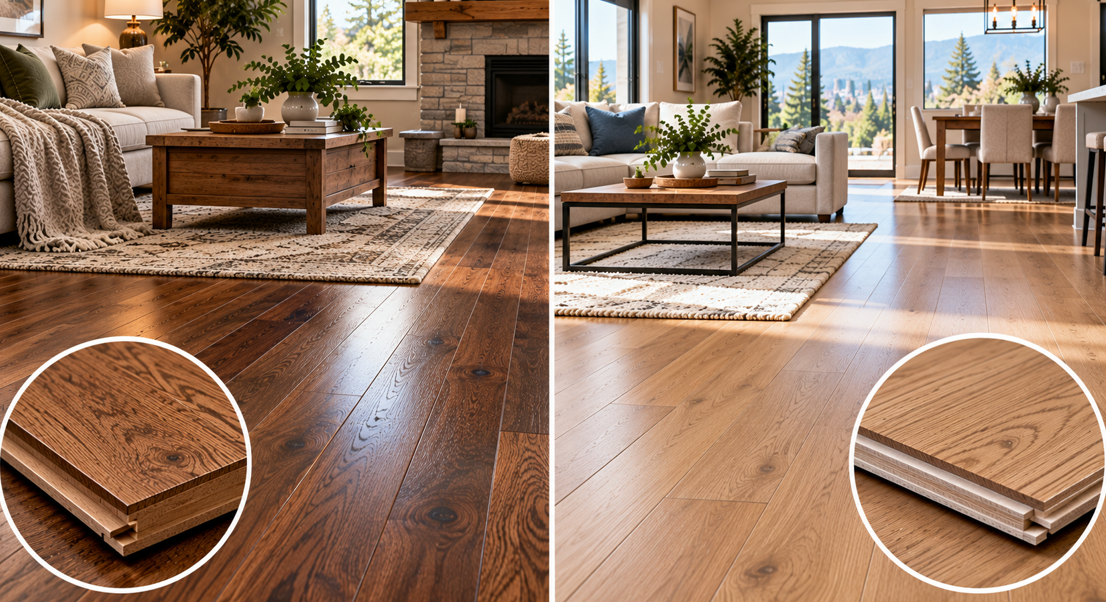
Few materials feel as timeless as real wood underfoot. Once you decide on hardwood, though, a second question follows: solid or engineered? Both are genuine wood, both can look stunning, and both have a place in Portland homes. The right pick depends on your house, your subfloor and how you live. At Simple Floors Portland, our family-owned team helps homeowners compare the two every day, and this guide shares the same honest advice we give in our showroom.
What Is Solid Hardwood?
Solid hardwood is exactly what it sounds like: each plank is milled from a single piece of wood, typically about three-quarters of an inch thick. It has been the standard in American homes for generations, and many older local houses still have their original solid oak or fir floors.
Key traits of solid hardwood:
Long lifespan when cared for, often lasting for decades
Multiple refinishes, since the thick wear surface can be sanded many times
Nail-down installation over a wood subfloor
More movement with seasonal changes in humidity
What Is Engineered Hardwood?
Engineered hardwood has a top layer of real wood bonded to a stable core made of plywood or high-density layers set in a cross-grain pattern. That construction resists the expanding and shrinking that solid wood experiences as humidity rises and falls.
Key traits of engineered hardwood:
Greater dimensional stability in changing conditions
Flexible installation, including floating, glue-down or nail-down methods
Works over concrete and in some below-grade spaces
Wide-plank friendly, since stability allows broader boards with less risk of cupping
From the surface, a quality engineered plank looks and feels like solid wood, because the top layer is real wood.
How Our Climate Affects the Choice
Portland's weather swings between long, rainy months and warm, dry summers. Indoor humidity follows that pattern, and wood responds to it. Solid planks absorb moisture in the wet season and release it in summer, which can lead to small gaps or slight cupping if conditions change sharply.
Engineered hardwood's layered core limits that movement. For homes with crawl spaces, slab foundations or rooms that see bigger humidity shifts, that stability is a real advantage. Solid hardwood still performs beautifully when the home has a good wood subfloor and steady indoor humidity, ideally supported by a humidifier in winter and good ventilation year-round.
Comparing the Two Side by Side
Appearance
Both deliver the warmth and grain of real wood. Engineered options often come in wider planks and a broad range of factory finishes. Solid planks can be site-finished for a custom stain, which suits homeowners matching existing floors.
Refinishing and Longevity
Solid hardwood wins on the number of times it can be sanded. Engineered hardwood can usually be refinished too, but how many times depends on the thickness of the top wear layer. A thicker wear layer gives you more future refinishing options.
Installation and Subfloors
This is often the deciding factor. Solid hardwood is nailed to a wood subfloor and is not recommended directly over concrete or below grade. Engineered hardwood can go over concrete, radiant heat systems in many cases, and existing floors, which opens up more rooms and can simplify a remodel.
Comfort and Sound
Both feel solid underfoot when installed correctly. Floating engineered floors benefit from a quality underlayment to reduce hollow sounds, and we supply setting material and underlayment matched to each product.
Which Rooms Suit Each Option?
A few general guidelines help narrow the choice:
Living and dining rooms on a wood subfloor: either works well; solid offers maximum refinishing potential
Kitchens: engineered handles humidity shifts from cooking and cleaning with more stability
Basements and slab foundations: engineered is the stronger fit
Older homes with original floors: solid can blend seamlessly with existing boards
Condos and multi-level buildings: engineered often meets installation and sound requirements more easily
You can browse both types in our hardwood flooring collection and compare species, widths and finishes in one place.
Living With Hardwood in the Pacific Northwest
Whichever type you choose, a few habits help hardwood thrive through the wet months:
Place mats at entries to catch rain, mud and moss tracked in from outside
Remove wet boots and umbrellas near the door
Wipe up water promptly
Keep indoor humidity steady with ventilation or a humidifier
Use felt pads under furniture
When the finish eventually wears, our sanding and hardwood refinishing service can restore the surface so the floor looks fresh again.
Value and Budget Considerations
Both solid and engineered hardwood offer lasting value, and pricing varies with species, plank width, finish and wear layer thickness. Rather than guessing, it helps to compare actual products side by side. Simple Floors Portland offers everyday low prices, a price match guarantee and transparent pricing, so you can weigh your options with clear numbers. With over 3,000 hardwood, engineered laminate and tile options, including exclusive factory-direct lines, there is a wide range to suit different budgets.
Seeing Samples in Your Own Space
Wood looks different under your lighting than it does in a showroom. Our large display boards are available for take-home viewing, so you can see how a plank looks next to your cabinets, walls and furniture at different times of day. That simple step often makes the decision clear.
Making the Final Call
Here is a quick summary to guide your decision:
Choose solid hardwood if you have a wood subfloor, want the most refinishing potential, or are matching original floors in an older home.
Choose engineered hardwood if you are installing over concrete or radiant heat, want wide planks, or need extra stability in rooms with changing humidity.
Either way, professional installation by licensed installers protects your investment and makes sure the floor performs as intended.
Find Your Hardwood With Simple Floors Portland
Solid and engineered hardwood both bring natural beauty and lasting value to Portland homes. The best choice comes down to your subfloor, your rooms and your plans for the years ahead.
Visit our showroom at 3477 NW Yeon Ave, take home sample boards, or call (503) 714-9247 to set up a next-day appointment. Want help comparing options for your home? Reach out to us and we will make it simple.


