

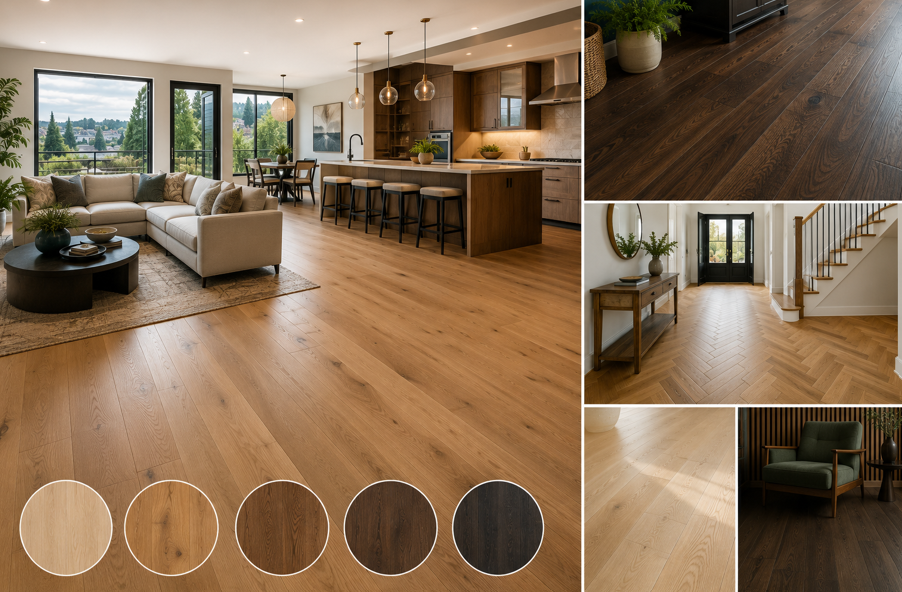
Hardwood in 2026 Is All About Warmth, Character, and Longevity
Hardwood flooring has always had staying power, but the looks shaping 2026 feel especially focused on warmth, natural character, and designs that can live comfortably with changing interiors. Instead of chasing a highly polished or overly uniform appearance, many current styles emphasize wood grain, softer finishes, wider boards, and colors that feel grounded and easy to pair with the rest of the home. Current 2026 flooring coverage consistently points to warm natural tones, matte finishes, and wide planks as major directions in wood flooring design.
For Tigard homeowners planning a remodel, replacing worn floors, or choosing materials for a new space, that shift opens up plenty of options. A hardwood floor can still feel timeless while bringing in details that make a room look current.
At Simple Floors Portland, homeowners can compare hardwood styles, finishes, and samples with help from a knowledgeable flooring team. Seeing larger samples in person can make it easier to understand how a color or grain pattern will work with your lighting, furniture, cabinetry, and wall colors.
The key is to treat trends as inspiration rather than rules. The best floor is one that fits the way you live, works with the architecture and finishes already in your home, and still feels right after this year's design cycle moves on.
Here are the hardwood flooring trends worth watching in 2026 and how Tigard homeowners can decide which ones make sense for their spaces.
1. Warm Natural Wood Tones Are Taking the Lead
One of the clearest design directions in 2026 is a move toward warmer, nature-inspired hardwood colors. Honey oak, soft amber, caramel, chestnut, and balanced mid-tone browns are showing up across current trend coverage, while cooler gray looks are losing some of the attention they held in previous years.
Why Warmer Tones Feel So Versatile
Warm hardwood can make a room feel inviting without forcing the rest of the design into a traditional style. A natural oak tone may work with contemporary furniture, warm white walls, stone surfaces, soft textiles, black accents, or classic wood cabinetry.
That flexibility is useful when homeowners want flooring that can stay in place through future paint, furniture, or décor changes.
Warm tones can also help create a more comfortable visual balance in rooms filled with cool surfaces such as stainless steel, white cabinets, gray countertops, or large windows.
Light, Medium, or Rich?
The warm trend is broad enough to suit different spaces.
Consider:
Light honey and wheat tones for an airy, relaxed look
Natural oak shades for a balanced, versatile foundation
Caramel and medium brown for more depth and warmth
Chestnut or deeper brown when you want stronger contrast
The goal is not to choose the warmest color available. Look for a tone that works with the fixed finishes in the room and feels natural under the lighting you use every day.
2. Wide Planks Continue to Create a Cleaner, More Open Look
Wide-plank hardwood remains one of the most visible flooring directions in 2026. Fewer seams allow more of the wood grain to show across each board, which can give a floor a calmer and more continuous appearance. Wide planks have remained prominent in current flooring trend reporting, particularly alongside natural tones and understated finishes.
Why Plank Width Changes the Room
Plank width affects more than the floor itself. It changes the visual rhythm of the entire space.
Narrower boards create more lines across the room, which can feel traditional, detailed, or energetic. Wider boards reduce the number of visible seams and put more attention on the grain and natural variation of the wood.
That can work particularly well in:
Open living and dining areas
Large kitchens
Primary bedrooms
Great rooms
Remodels with a clean, contemporary direction
Wide planks can also look beautiful in smaller rooms. The important part is proportion. A very wide board with dramatic color variation may dominate a compact space, while a quieter wide-plank style may create a simple, spacious feel.
Let the Grain Be Part of the Design
Because wide boards show more surface area, the wood's grain becomes a stronger design feature. Before choosing a floor, look at several boards together rather than judging the product from one small sample.
Variation between planks is part of what gives hardwood its character, and wide-plank layouts make that variation easier to appreciate.
3. Matte and Low-Sheen Finishes Feel More Natural
High-gloss floors can create a formal, polished look, but 2026 trends continue to favor matte, low-sheen, and more natural-looking finishes. These surfaces let the grain and color of the wood take center stage instead of creating strong reflections across the floor.
A Softer Look for Everyday Interiors
Matte hardwood can work with many design styles because it does not push the room toward a highly formal appearance. It can feel at home in modern, transitional, rustic, Scandinavian-inspired, and casual interiors.
A low-sheen finish can also help warm wood tones look more natural because the eye sees the texture and color without as much surface glare.
Think About the Whole Room
Finish selection works best when it supports the surrounding materials.
For example:
Matte floors can pair well with natural stone and textured fabrics.
Satin finishes can add a little more light reflection without looking highly glossy.
Lower-sheen surfaces can complement simple cabinetry and understated furniture.
Richer wood tones with a softer finish can create warmth without making the room feel overly formal.
When comparing hardwood flooring, look at both color and sheen. Two floors in a similar shade can create very different impressions depending on the surface finish.
4. Natural Grain and Character Are Becoming Design Features
Perfectly uniform flooring is not the only path to a polished room. One of the more appealing trends in 2026 is greater appreciation for visible grain, tonal movement, knots, and other natural-looking details that give a floor personality.
Why Variation Can Make a Room Feel More Layered
A floor with subtle variation can add depth without requiring bold patterns or dramatic colors. Instead of every plank looking nearly identical, natural shifts in grain and tone create a more layered surface.
This can be especially effective in rooms with simple walls and furniture, where the floor can provide texture and interest.
Homeowners who prefer a quieter look can still participate in this trend. Natural character exists on a spectrum. Some hardwood styles show gentle grain and limited variation, while others make knots, mineral streaks, or tonal differences much more noticeable.
Choose the Amount of Character You Actually Like
Before committing, decide whether you want the floor to act as a calm background or a major design feature.
For a restrained look, consider consistent coloring with visible but subtle grain. For a more organic or rustic feel, stronger variation can create a floor with more personality.
Viewing multiple planks together is important because a single sample may not show the full range of the product.
5. White Oak and Other Adaptable Wood Looks Stay Relevant
White oak continues to appear prominently in 2026 hardwood trend discussions because its grain and adaptable coloring work with a broad range of interiors. Current trend reporting places white oak alongside natural and light tones, warm mid-tones, wide boards, and textured finishes.
Why Adaptability Matters
Flooring often lasts through several rounds of décor changes. A versatile hardwood gives homeowners more freedom to repaint walls, switch furniture, update cabinets, or change textiles without making the floor feel disconnected from the new design.
White oak is only one option, though. The best species or style depends on the look, performance needs, and budget of the project.
Other wood looks can provide:
Richer grain
Deeper natural color
More dramatic variation
A more traditional appearance
A cleaner, quieter visual
Instead of choosing a species because it is trending, compare how different options look in the room and how their characteristics fit your household.
Keep Undertones in Mind
A light floor can lean warm, neutral, or cool. A medium floor can be golden, brown, reddish, or muted. Those undertones influence how the hardwood works with cabinetry, trim, countertops, and wall paint.
Take-home samples are especially valuable when two options look similar in the showroom but react differently to your home's natural and artificial lighting.
6. Herringbone and Patterned Hardwood Add a Statement
Straight plank layouts are still a classic choice, but patterned hardwood is getting renewed attention in 2026. Herringbone and other geometric layouts can turn the floor itself into a design feature, with herringbone appearing in several current flooring trend forecasts.
Where Pattern Works Best
Patterned hardwood can be effective when you want to highlight a specific area, such as:
An entry
A dining room
A formal sitting area
A home office
A defined zone within a larger open space
Herringbone creates repeated directional movement, which gives the room more energy than a standard straight layout.
A Little Pattern Can Go a Long Way
Not every home needs patterned flooring throughout. In fact, using it selectively can make the design feel more intentional.
A patterned entry paired with straight planks in adjoining spaces, for example, can create a strong first impression without making the entire floor visually busy.
Pattern also works best when the wood color and surrounding finishes have enough restraint to let the layout read clearly. If the boards already have dramatic variation, adding a complex installation pattern can produce a much stronger effect.
For homeowners who like classic materials but want a distinctive update, this trend offers a way to make hardwood feel personal without relying on an unusual color.
7. Whole-Home Continuity Is More Important Than One Trendy Room
Another useful direction in flooring design is thinking beyond one room at a time. Hardwood can help connected spaces feel more cohesive when the tone, plank style, and direction create a consistent visual foundation.
Why Flow Matters
Homes often contain multiple finishes, furniture styles, and paint colors. A continuous hardwood floor can help tie those spaces together.
This is especially useful across:
Living and dining areas
Hallways and bedrooms
Open kitchens and family rooms
Connected main-level spaces
A consistent floor can make the home feel calmer even when individual rooms have different personalities.
Avoid Choosing in Isolation
A floor that looks perfect in one room may not work as well when it reaches the next space. Before selecting a trend, think about sight lines between rooms.
If you love warm natural oak in the living room, consider how it will look next to kitchen cabinets, stair materials, tile, or other floors. If you prefer a wide plank, check whether that scale works across both large and compact spaces.
The most successful trend is often the one that creates continuity rather than calling attention to itself in every room.
8. Personalized Hardwood Choices Matter More Than
Following Every Trend
Trends can help narrow the options, but 2026 is not about making every hardwood floor look the same. Warm tones, wide planks, matte finishes, natural grain, and patterned layouts can be combined in many ways.
The right mix depends on the home.
Start With Your Priorities
Ask a few practical questions before focusing on style:
Which rooms are being updated?
How much natural light does the space receive?
Do you want the floor to blend in or stand out?
Which cabinetry, wall colors, and furniture will remain?
Do you prefer subtle grain or noticeable character?
Are you updating one room or creating continuity through several spaces?
Those answers help eliminate options that may look attractive in a photograph but do not suit the project.
Compare Trends Side by Side
You may love warm flooring but prefer a narrower plank. You may want wide boards but favor a quieter grain. You may like herringbone in an entry while keeping the rest of the home simple.
That is the advantage of treating trends as a menu rather than a checklist. You can take the design elements that work for your home and leave the rest.
Choosing a 2026 Hardwood Look for Your Tigard Home
The strongest hardwood trends of 2026 share one common idea: the floor should feel natural, intentional, and comfortable enough to live with for years.
Warm wood tones bring an inviting foundation. Wide planks create a cleaner visual rhythm. Matte finishes let grain and texture stand out. Natural variation adds character. Herringbone and other patterns give homeowners room to make a stronger design statement.
For Tigard homeowners, the best starting point is to compare those trends against the realities of the room. Look at natural light, existing finishes, connected spaces, and the overall atmosphere you want the home to have.
It also helps to view larger samples rather than making a decision from a small swatch or screen. Walk the sample through the rooms involved, check it at different times of day, and place it next to cabinets, furniture, trim, and wall colors.
A trend can provide inspiration, but a beautiful hardwood floor works because it belongs in the home, not simply because it was popular when it was installed.
If you are exploring new hardwood for a Tigard home and want help comparing colors, plank styles, and finishes, get in touch with the Simple Floors Portland team to discuss your space and the look you want to create.


