

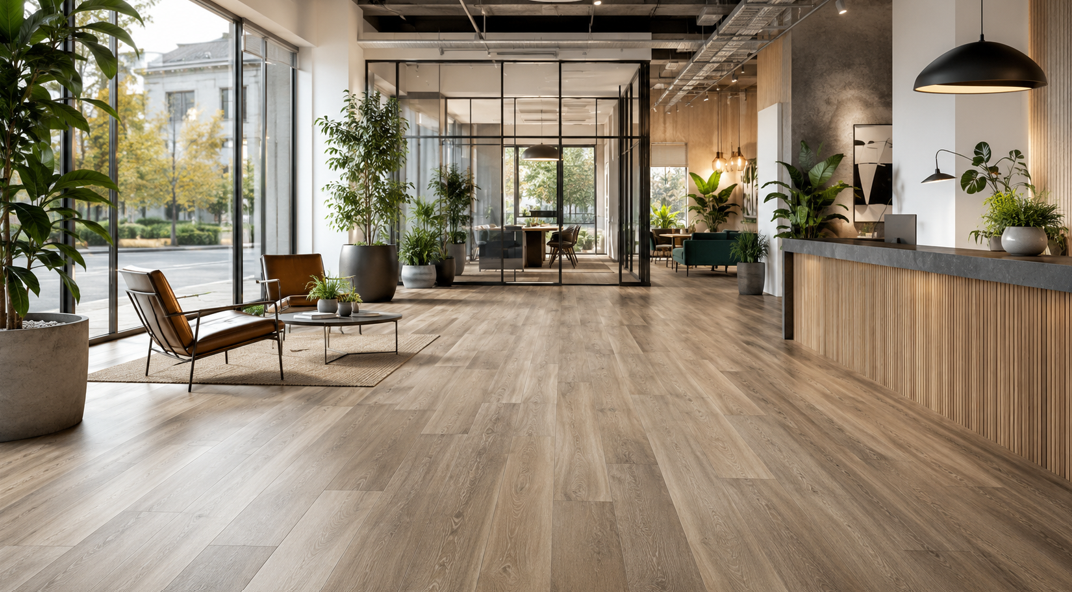
A Practical Flooring Choice for Busy Commercial Interiors
Business flooring has to do more than look good. It needs to support the way a space works every day, fit the visual identity of the business, stay manageable to maintain, and make sense within the project budget.
That is why laminate can be worth considering for many Portland commercial interiors.
Modern laminate is available in a wide range of wood-inspired colors, plank styles, and finishes, giving businesses flexibility when they want a polished appearance without automatically moving toward more costly flooring categories. Depending on the specific product selected, laminate can work well in offices, retail spaces, reception areas, professional environments, and other commercial settings where appearance and everyday practicality both matter.
At Simple Floors Portland, business owners can explore flooring options with a team that works with residential and commercial installation projects throughout the Portland area.
The key is choosing laminate based on how the space is actually used. A quiet private office and a busy customer-facing retail area do not place the same demands on a floor. Foot traffic, furniture movement, maintenance expectations, interior style, and product specifications all deserve attention before making a final decision.
For Portland businesses planning a renovation or updating an existing interior, laminate offers several advantages worth exploring.
1. Laminate Can Create a Professional Look Without Overcomplicating the Design
Commercial interiors make an immediate impression. Customers, clients, employees, and visitors notice the environment around them, even when they are not consciously evaluating the flooring.
A well-chosen laminate floor can help create a space that feels polished, welcoming, and intentional.
Wood-Inspired Looks Work Across Many Business Styles
Laminate is available in designs that imitate the visual character of different wood species, colors, and plank styles.
That gives businesses plenty of flexibility.
A lighter natural wood look can suit:
Modern offices
Creative studios
Wellness spaces
Boutiques
Reception areas
Contemporary professional settings
Medium brown tones can create a warmer, more traditional atmosphere that works well in:
Professional offices
Showrooms
Consulting spaces
Waiting areas
Service businesses
Darker tones can provide greater contrast and a more dramatic look when paired with light walls, cabinetry, or furniture.
The right option depends on the business itself. Flooring in a relaxed design studio may need to communicate something very different from flooring in a formal office.
The Floor Can Support Your Brand Without Taking Over
Commercial flooring does not always need to become the visual centerpiece of a room.
A restrained laminate color can provide a consistent backdrop that lets signage, furnishings, product displays, lighting, and brand colors stand out.
Businesses looking for stronger visual character can go in the opposite direction and choose flooring with richer grain, deeper color, or more noticeable variation.
Either approach can work. The important part is making the floor feel connected to the rest of the interior.
2. Laminate Offers Plenty of Design Flexibility
One of laminate's biggest advantages is the number of visual options available.
Commercial spaces rarely exist in isolation. The new floor usually needs to coordinate with furniture, cabinets, desks, shelving, counters, paint colors, lighting, and existing architectural finishes.
Having a broad range of laminate looks gives business owners more room to find a combination that works.
Light Laminate Can Keep a Space Feeling Open
Light wood-inspired flooring can help create a brighter visual foundation.
It may be especially appealing in:
Smaller offices
Narrow reception areas
Businesses with limited natural light
Contemporary retail spaces
Interiors with dark furniture
A lighter floor does not physically increase the size of a room, but it can help reduce visual heaviness.
Medium Tones Offer an Easy Middle Ground
Natural oak-inspired shades and medium browns can work particularly well when a business wants warmth without committing to very light or very dark flooring.
These colors often pair easily with a variety of furniture and wall colors, which may be helpful when a business plans to refresh furnishings or décor over time.
Darker Laminate Adds Definition
Deeper brown, walnut-inspired, or charcoal tones can create stronger visual contrast.
They may suit businesses looking for a more grounded, sophisticated atmosphere, particularly when combined with lighter walls or cabinetry.
When considering darker flooring, think about the amount of natural and artificial light in the room so that the finished space remains visually balanced.
3. Commercial Flooring Needs to Match the Level of Foot Traffic
A beautiful floor only works when it is suitable for the environment where it will be installed.
Commercial spaces can experience very different levels of activity.
A private office may see relatively predictable foot traffic, while a retail store, reception area, or shared workspace may have employees and visitors moving through throughout the day.
Start With How the Space Is Used
Before choosing a laminate product, consider:
How many people regularly use the area
Whether customers enter directly from outdoors
How frequently chairs or furniture move
Whether rolling office chairs are used
Which areas receive the most traffic
How the floor will be cleaned
Whether entrances are likely to bring in moisture or debris
These details help determine what type of product specifications make sense for the project.
Product Selection Matters
Not every laminate product is designed for identical conditions.
When comparing laminate flooring, business owners can look beyond color and consider the manufacturer's intended application, wear characteristics, care instructions, warranty information, and suitability for the specific commercial environment.
This is especially important in high-use areas.
The floor selected for a low-traffic office does not necessarily need the same characteristics as flooring used in a busy customer-facing space.
Rather than choosing laminate based on appearance alone, match the product to the daily demands of the business.
4. Laminate Can Make Routine Floor Care More Manageable
For business owners, maintenance is not an abstract concern. It affects daily operations.
Floors in commercial interiors can collect dust, dirt, grit, and marks simply because more people may use the space than in a typical residential room.
A flooring option that fits the business's cleaning routine can make everyday upkeep easier to plan.
Establish a Simple Maintenance Routine
The exact cleaning method depends on the laminate product, so always follow the manufacturer's care guidance.
In general, a commercial maintenance routine may include:
Removing loose dirt regularly
Cleaning spills promptly
Using entrance mats to reduce tracked-in debris
Protecting the floor beneath frequently moved furniture
Using cleaning products recommended for the flooring
Avoiding excessive moisture during cleaning
Consistency matters more than turning maintenance into a major project.
Keeping grit and debris under control is particularly useful because particles brought in on shoes can create unnecessary wear over time.
Pay Attention to Entry Areas
Portland businesses may regularly deal with wet footwear during rainy periods.
Entry mats can help collect water and debris before they travel farther into the space. Mats also need regular cleaning so that they continue doing their job rather than becoming a collection point for dirt.
Any spills or standing moisture on laminate deserve prompt attention according to the product's care recommendations.
Flooring performance varies between products, so businesses that expect regular exposure to moisture need to discuss those conditions when selecting materials.
5. Laminate Can Help Businesses Refresh Their Interior Style
Commercial interiors can start to feel dated even when the business itself is doing well.
Flooring covers a large visual area, so updating it can significantly change the atmosphere of the space without requiring every design element to be replaced.
Update the Foundation First
Imagine an office with neutral walls, practical furniture, and older flooring that no longer fits the direction of the business.
Changing the floor to a warmer natural wood look can shift the entire room toward a more current and welcoming appearance.
A lighter laminate may create a cleaner, more open feel.
A deeper brown can bring warmth and definition.
A quieter grain pattern can make the interior feel streamlined, while more visible wood-inspired character can make the space feel relaxed and approachable.
Work With Existing Furniture
A flooring project does not automatically mean replacing desks, shelving, seating, and other furnishings.
Instead, choose a laminate tone that complements the major items staying in the room.
Consider:
Desk finishes
Shelving
Reception counters
Cabinetry
Wall colors
Upholstery
Metal accents
Branded signage
Looking at these elements together can help the completed interior feel intentional rather than pieced together.
6. Different Portland Businesses Can Use Laminate in Different Ways
There is no single commercial design formula.
The way laminate works in a business depends on what customers do there, how employees use the environment, and what atmosphere the company wants to create.
Offices and Professional Spaces
Office flooring often needs to create a polished backdrop without distracting from the rest of the room.
Natural and medium wood-inspired laminate can provide warmth while keeping the overall interior professional.
For open offices, maintaining the same flooring through connected areas can also create stronger visual continuity.
Retail Spaces
Retail flooring becomes part of the customer experience.
The floor may sit beside displays, shelving, counters, product packaging, and brand signage, so color coordination matters.
A restrained flooring design can keep attention on merchandise, while a richer wood look can become part of the store's overall atmosphere.
Reception and Waiting Areas
Reception areas help form a visitor's first impression of the business.
A well-coordinated laminate floor can help the space feel organized, welcoming, and finished.
Think about how the floor looks from the entrance and how it connects visually to the reception desk, seating, walls, and neighboring rooms.
Studios and Creative Workspaces
Creative businesses may have more freedom to make flooring part of their personality.
Light tones can support minimalist environments, while noticeable grain and warmer colors can create a more expressive, relaxed interior.
Whatever the style, product specifications still need to match the actual use of the room.
7. Flooring Installation Planning Matters in a Commercial Project
Choosing the product is only one part of a commercial flooring update.
Businesses also need to consider how the installation fits with operations, furniture, existing flooring, and the condition of the surface underneath.
Simple Floors Portland provides commercial flooring installation and notes that projects can be coordinated around business schedules to help minimize disruption to operations.
Plan Around Business Activity
Depending on the project, planning may involve:
Identifying which areas need to remain accessible
Coordinating furniture movement
Preparing existing flooring for removal
Scheduling work around business operations
Checking the subfloor
Planning transitions between flooring types
Completing final inspection and cleanup
A clear installation plan helps everyone understand what happens before, during, and after the project.
Subfloor Preparation Deserves Attention
The surface beneath the flooring affects the installation above it.
Existing flooring may need to be removed, and the subfloor may need preparation before the new laminate can be installed.
Conditions vary between commercial properties, so the installation team can assess the specific project rather than relying on a one-size-fits-all approach.
Think About the Entire Space
If only one area is being updated, consider how the new flooring connects to existing surfaces.
That includes transitions into:
Hallways
Storage rooms
Offices
Tile areas
Carpeted rooms
Entryways
The goal is to make the finished project feel connected and practical.
8. Samples Can Help Prevent Design Guesswork
Flooring is hard to judge from a small photograph.
Color, grain, contrast, and undertones can change depending on the lighting and surrounding finishes.
That is why samples are valuable in commercial projects.
Review Flooring Under Your Actual Lighting
Take a sample into the business and look at it:
Near windows
Away from windows
Under overhead lighting
Beside furniture
Near the reception desk
Next to cabinetry
Against wall colors
During different times of day
A laminate that looks warm in one lighting condition may appear more neutral somewhere else.
Look at More Than One Board
If possible, view enough material to understand the overall pattern and variation.
A single plank may not show how the full floor will look across a larger office, showroom, or customer area.
Larger samples can also help business owners compare two similar colors more confidently.
Simple Floors Portland offers large flooring display boards for take-home viewing, giving customers a chance to see flooring options in their own environment before making a decision.
9. Choose Laminate Based on Long-Term Business Needs
A commercial flooring decision is easier when you look beyond opening day.
The space may change over time. Furniture gets rearranged, walls get repainted, branding evolves, and rooms may serve different purposes.
Choosing flooring with some flexibility can help the interior continue working as those changes happen.
Ask the Right Questions Before Choosing
Consider:
Will the room remain in the same use?
Is customer traffic likely to increase?
Will furniture move regularly?
Does the floor need to work with future décor changes?
Are entry areas exposed to wet footwear?
What maintenance routine is realistic for the business?
Does the selected product suit the commercial application?
These questions help move the decision beyond “Which color looks best?”
Appearance matters, but it is only one piece of the project.
Aim for a Look That Fits the Business
Trends change. A well-planned business interior does not need to chase every design trend.
A natural laminate tone, simple plank appearance, and coordinated color palette can create an attractive foundation that stays flexible as other elements change.
If the business has a strong visual identity, flooring can also reinforce that personality through color, grain, and contrast.
The best result is a floor that feels like it belongs there.
Make Your Portland Business Space Work From the Ground Up
Laminate can be a strong option for commercial spaces when the right product is matched to the right environment.
It offers businesses a broad range of wood-inspired styles, giving owners flexibility to create interiors that feel bright, warm, professional, modern, understated, or distinctive.
The decision still needs to start with practical questions.
Consider foot traffic, lighting, furniture, cleaning routines, moisture exposure, product specifications, and the way the new floor connects to surrounding rooms. Then compare colors and patterns in the actual space rather than choosing solely from an online photo.
For offices, retail environments, reception areas, studios, and other Portland business spaces, thoughtful flooring can create a stronger visual foundation for everything above it.
If you're planning to update a commercial interior and want help comparing flooring options for your business, reach out to us to discuss your space, design goals, and installation needs.


